
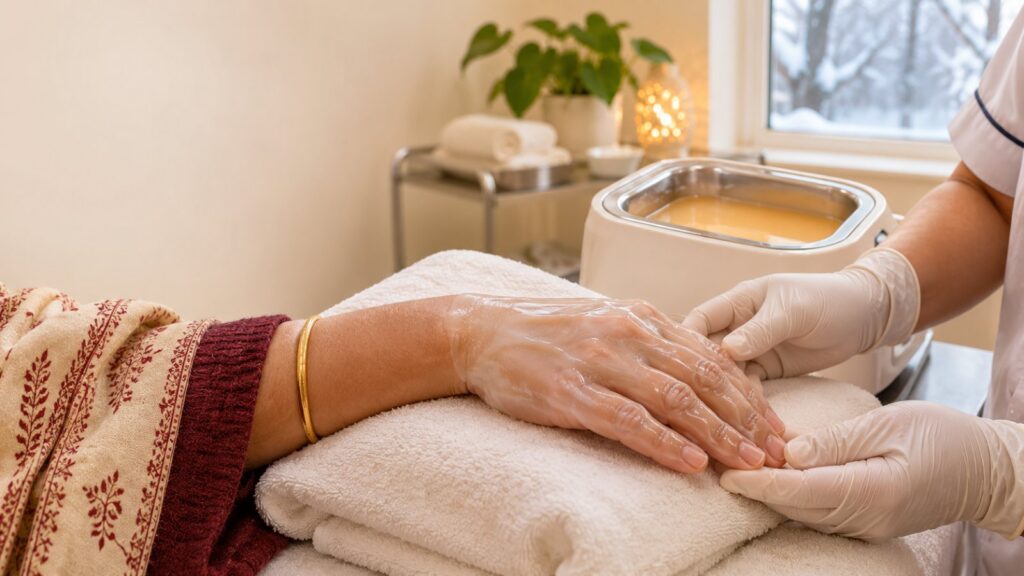
What is Paraffin Wax Therapy?
Paraffin Wax Therapy is a gentle heat treatment for hands, feet, and joints. Many people use it for relief from stiff, painful joints in winter. In fact, paraffin wax treatment for joint pain is popular in clinics and spas. The warm wax covers the skin, trapping heat and moisture. This therapy is often part of Ayurveda winter joint care for comfort and flexibility.
How Paraffin Wax Therapy Works for Joint Pain
First, the wax is melted in a special device. Then, you dip your hands or feet into the warm wax. As the wax cools, it forms a soft layer. This layer holds in heat, which helps blood flow and relaxes muscles. As a result, many people feel relief for stiff joints in cold weather. The warmth can also ease swelling and improve movement.
Common Symptoms of Stiff, Painful Joints in Winter
During winter, joint pain can become worse. For example, you may notice:
Because of these symptoms, daily tasks can feel harder. However, gentle heat from paraffin wax therapy may help.
Causes of Increased Joint Stiffness During Cold Weather
Cold weather can make joints feel tight and sore. For instance, low temperatures may slow blood flow to the hands and feet. As a result, muscles and tissues become less flexible. In addition, changes in air pressure can affect joint fluid, making movement harder. People with arthritis often notice more pain in winter. According to the CDC, cold and damp weather can trigger joint discomfort.
Step-by-Step Guide to Paraffin Wax Therapy
Many clinics offer paraffin wax therapy, but you can also do it at home. Here is a simple guide:
For safety, always test the wax temperature before use. Do not use paraffin wax therapy if you have open wounds, skin infections, or poor blood flow. If you have diabetes or nerve problems, talk to your doctor first.
Ayurvedic Perspective on Paraffin Wax Therapy
In Ayurveda, winter is known to increase “Vata,” which can cause joint pain and dryness. Therefore, warm oil massages and heat therapies are often suggested. Paraffin wax therapy fits well with these ideas. The warmth and moisture from the wax help balance Vata and soothe joints. Many Ayurveda winter joint care routines include heat treatments for comfort and mobility.
Benefits and Potential Risks
Paraffin wax therapy offers several benefits:
However, there are some risks. For example, burns can happen if the wax is too hot. Infections may occur if you have cuts or sores. People with poor blood flow or nerve damage should avoid this therapy unless a doctor approves. Always use clean, fresh wax and follow safety tips.
Prevention and Lifestyle Tips for Winter Joint Health
Besides paraffin wax therapy, you can try these tips for healthy joints in winter:
Because winter can be tough on joints, these habits may help you stay comfortable and active all season.